
Gratiot Weekly Arrest Log Sources
Gratiot County posts no official multi-day, 72-hour, weekly, or historic booking blotter. The Sheriff's Office connects to JailTracker, and that system covers current custody only. It is not a week-by-week arrest archive. The Sheriff's annual reports count yearly totals, without names or daily booking entries. So a multi-day search becomes a layered record trail. JailTracker confirms present county custody. The arresting agency holds its incident or arrest report. The jail holds intake records. The courts hold the procedural history. News stories add dated context, but editorial selection is not a county-certified arrest log.
Build a Gratiot Arrest Timeline
Start with official records. Then work outward from there. This habit keeps a news mention or an old mirror from being mistaken for current custody, which matters when status changes fast. Log the date and source of every fact, because release, transfer, and court events can shift quickly.
- Check JailTracker for present custody and note any booking number shown.
- Identify the arresting agency and request its report for the relevant date range.
- Ask Gratiot County for the jail intake record when the person no longer appears live.
- Use the 65B District Court calendar or MiCOURT to trace public court events.
- Consult dated local-news coverage only for added context, then verify each claim officially.
For an event that may still be processing, the Daily Arrest Report path handles same-day verification. A weekly search should not squeeze current-custody data into a seven-day frame.
Gratiot Arrest Record Fields
A rebuilt log may pull fields from several records at once. Label where each field came from. Third-party pages often display more descriptive fields than the county's own text pages, but richer detail does not make those fields official or accurate.
| Field | How to read it |
|---|---|
| Name and booking number | Use the jail identifier to distinguish similar names. |
| Arrest and booking times | These may differ because booking follows transport and intake. |
| Arresting agency | Identifies who may hold the police report. |
| Charge text | Shows charges entered at booking. |
| Bond and custody | Reflects status at a point in time and may change. |
| Photo | Publisher-specific; Gratiot County promises no image for every entry. |
Physical descriptors on an unofficial mirror prove nothing about identity. Compare the official booking number and court case number whenever both are available.
Weekend Gratiot Arrest Research
The county documents no special weekend surge, delayed-post schedule, or holiday release pattern. So it would be wrong to call Monday's roster a full count. It misses arrests since Friday. A person may still be processing. They may have been released already. They may have transferred before the search even started. Police reports and court entries also surface on different schedules. For a current custody question, call the jail at 989-875-5211. For a period-based list, send a narrow request naming the dates and fields you want. Say whether you seek arrest reports, jail booking records, or both. Different offices create those records. They are not interchangeable. A date range should span the event date plus the later booking date when known. That distinction matters after a late-night stop. It widens after hospital care, transport, or delayed intake. Ask the responding agency for the incident report and the county for the booking entry. If the roster entry has rolled off, include the person's full name and booking number. Avoid asking staff to rebuild a broad weekly list.
Gratiot Arrest Archives and Retention
Gratiot County publishes no name-by-name online booking archive. It also states no public period for how long a booking photo stays online. The live roster rolling off is not a destruction schedule. Michigan's local law-enforcement retention guide sets the rules. Records must follow approved retention schedules. It also describes jail inmate jackets filed by inmate number. One jacket can hold information from several arrests. When an older record matters, file a prompt, specific FOIA request. Ask separately for the booking entry, the image, the jail jacket, and the date range. Destruction must be suspended once a FOIA request arrives. It must also stop when litigation or an investigation is imminent. Gratiot sets no published retention term for booking photos, so no page should invent one. The Archives of Michigan county guides can assist with older public records. They promise no current jail-photo collection, though.
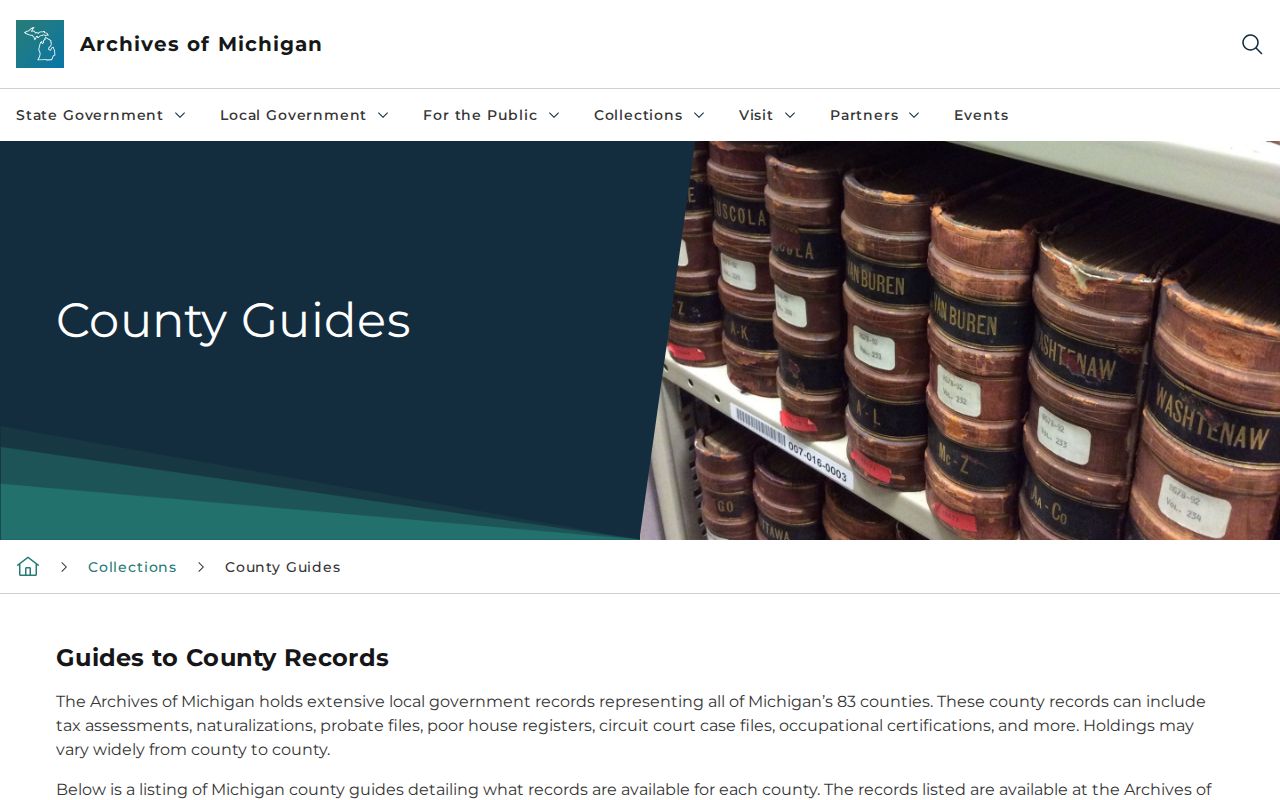
The archive route serves historical research, while JailTracker serves current custody.
Gratiot News Blotters Are Periodic
The Gratiot County Herald news section runs local police, court, and public-safety coverage, and its issues have carried blotter-style arrest and warrant material. The St. Louis Sentinel keeps a periodic Cop Calls page too. Neither is a live, complete, countywide booking feed. Publication choices, deadlines, and story focus leave events out. The Herald's news index shows that editorial format at a glance.

Use an article's publication date and its own facts. Then check the jail and court for current status and disposition.
Unofficial Gratiot Arrest Mirrors
Once official channels are exhausted, a county-local mirror may hint at an older entry. RecentlyBooked describes a recent period and claims multiple daily refreshes. Busted Newspaper offers paginated pages. Mugshots.com keeps an older aggregate section. Michigan Arrests.org allows date navigation. Each is unofficial. The RecentlyBooked Gratiot section is one example of that secondary landscape. Windows, images, charge text, and update times may be stale or incomplete.
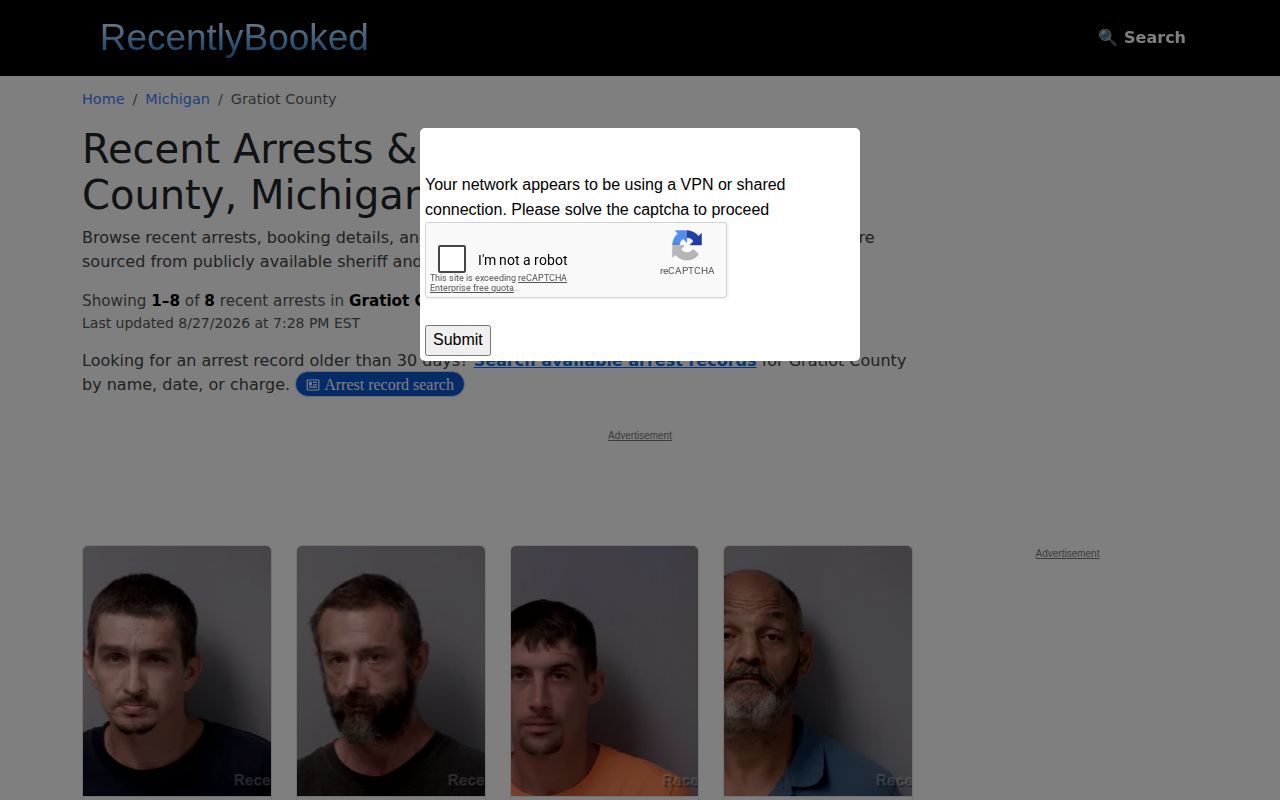
Never treat a mirror as proof of custody. Verify the booking with the county and the outcome with the court.
Dispatch Reports Are Not Arrest Logs
Gratiot County Central Dispatch runs the county's emergency communications. Its event and call files track what dispatchers sent over the air. Dispatch does not write police reports. It also does not count jail bookings. A service call may end with no arrest at all, so call volume says nothing about who was arrested in Gratiot County. County materials say event reports are kept for ten years, while call and radio recordings last about three and a half. Those clocks govern communications records, not booking photos. For the arrest itself, ask the responding agency for the police report and the jail for the booking record.
Dispatch Reports Are Not Arrest Logs
Dispatch work and arrest paperwork live in different offices. Gratiot County Central Dispatch coordinates 911 calls and emergency traffic for agencies across the county. Its records show the communications side of an incident. They are not police reports or booking logs. A call for service can end quietly. Call volume says nothing about how many people were arrested in Gratiot County. County materials state that event reports are retained for ten years. Call and radio recordings last roughly three and a half. Those limits cover communications records, never mugshots. Dispatch can still tell you which agency answered a call. You just need the place and the rough time. Then send your report request there. Booking questions go to the Sheriff's Office once a person entered the Gratiot County Jail. That split matters in a county patrolled by city police, the Sheriff, and state officers.
Follow Gratiot Arrests Into Court
A weekly arrest log only shows day one of a case. Gratiot County's 65B District Court calendar can point you to an arraignment or hearing. The county says it refreshes every thirty minutes. Defendants appear by last name. Nonpublic matters stay off the list. MiCOURT adds another public search point, though its online information is not the official record and protected case types may be missing.
Match on a booking or case number. Names alone invite errors. For a certified or complete record, contact the clerk of the proper court. Cases move after booking. A prosecutor can decline or revise a charge, a judge can dismiss a count, and outcomes arrive only through the court.
Records requests work best with detail. Include the event number when you have one, plus the responding department, the location, and the date. A dispatch record shows a call sent or cleared. It cannot give the arrest narrative. The responding officer's report carries that story, while the jail record covers booking. Keeping those layers apart stops a canceled response or medical event from being mislabeled as a Gratiot County arrest.
Note: News and archive searches can surface an older Gratiot County event, but the responsible government office must verify the official record and outcome.